Gisela Peters · 28 October 2026
Swiftfeld Library Digitization Efforts Align with Community Garden Rollouts and Health Data Insights
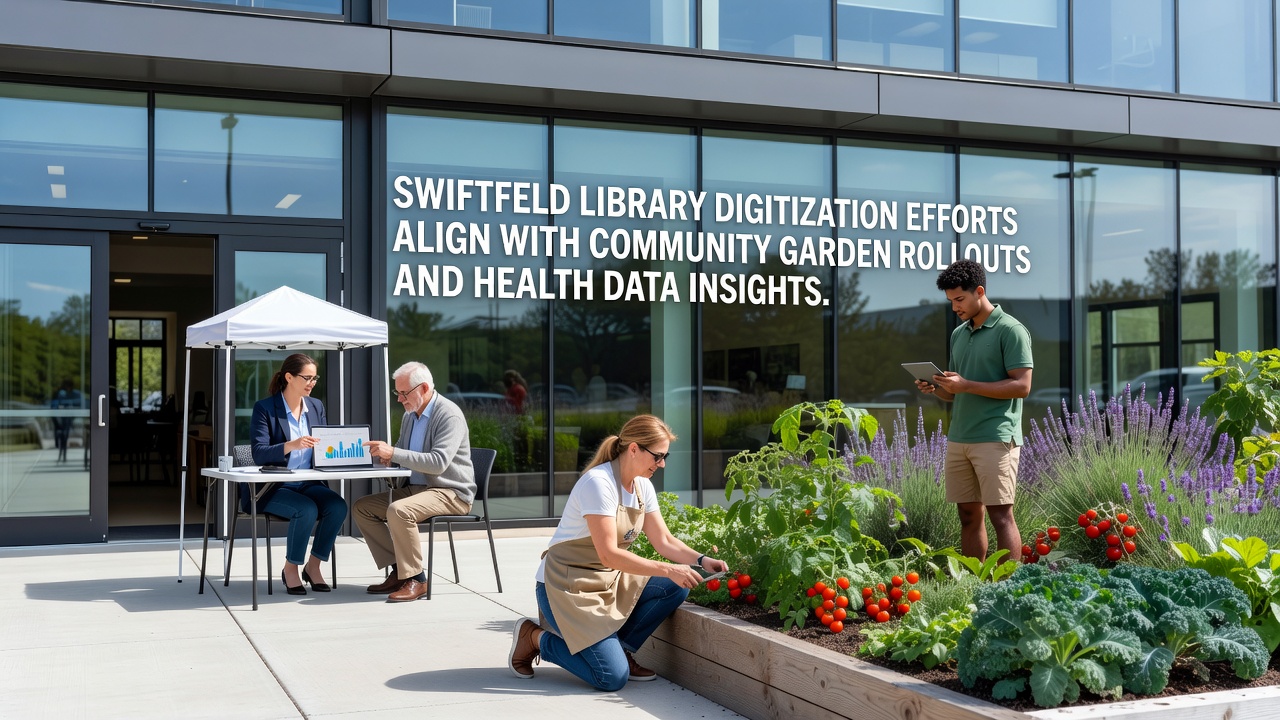
Swiftfeld has launched coordinated initiatives that connect the digitization of its public library collections with the expansion of neighborhood community gardens and the analysis of local health data sets, and these projects have progressed in tandem since early planning stages began in 2024. Officials integrated digital archiving processes with garden site selections to create accessible records on plant varieties suited to regional conditions while cross-referencing anonymized health metrics that track community well-being indicators such as respiratory health and physical activity levels.
Library Digitization Processes Underway
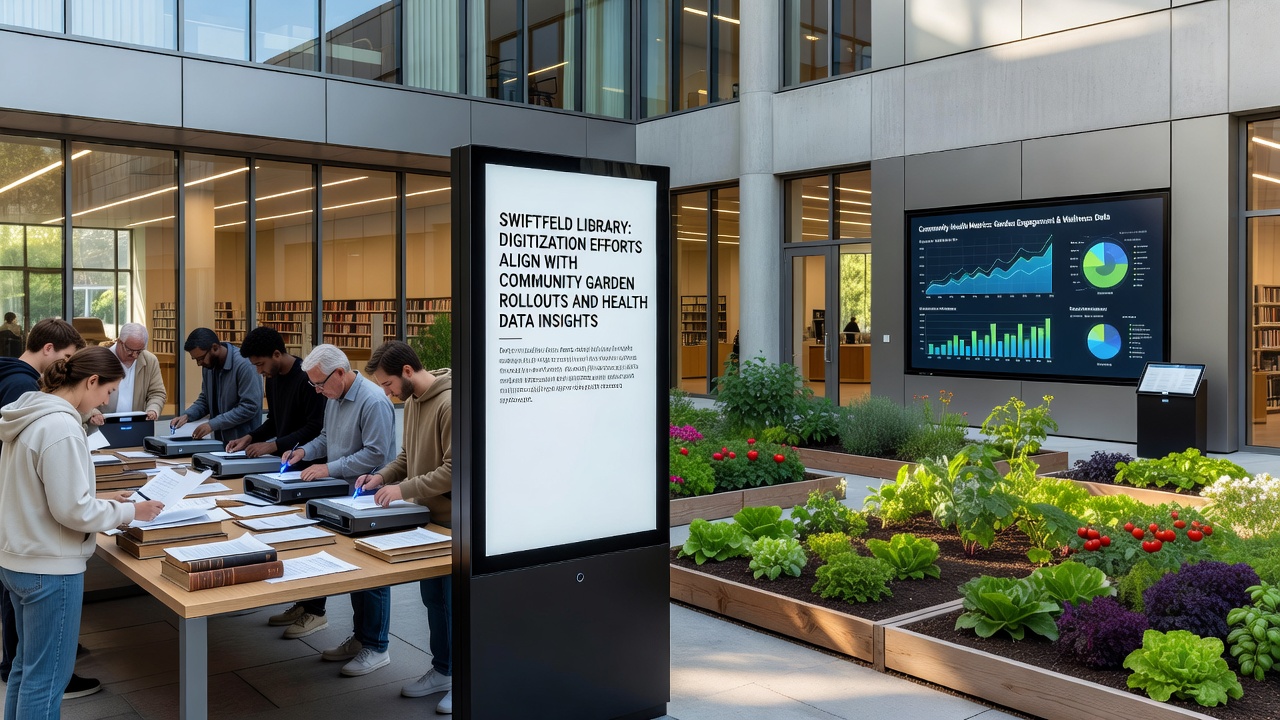
Library teams have scanned and catalogued thousands of volumes along with local historical records through October 2026, and this work has produced searchable databases that residents access via public terminals and mobile applications. The digitization effort includes metadata tagging for topics related to agriculture and nutrition so users can retrieve information on seed saving techniques and seasonal planting guides without needing physical copies. Equipment upgrades funded through regional grants have allowed faster processing rates, and partnerships with academic institutions have ensured long-term preservation standards meet international archival benchmarks.
Community Garden Expansion Details
Neighborhood garden sites have opened across multiple districts with raised beds, irrigation systems, and shared tool libraries, and coordinators have used digitized maps from the library project to identify suitable soil conditions and sunlight exposure patterns. Volunteers have planted crops that align with nutritional data drawn from public health surveys, and harvest distributions have fed into local food security programs. Garden committees maintain digital logs that feed back into the library system, creating a cycle where planting outcomes contribute to updated community resources available online.
Health Data Integration and Analysis
Public health researchers have compiled regional datasets on activity levels and chronic condition prevalence, and analysts have overlaid these figures with garden participation records and library usage statistics to identify correlations between green space access and documented improvements in certain wellness markers. Studies from sources such as the Australian Institute of Health and Welfare have informed the methodology applied locally, while similar approaches from the European Centre for Disease Prevention and Control have guided data privacy protocols during integration. The resulting insights have shaped garden programming choices, including workshops on herbs linked to immune support and digital modules on urban farming drawn from library archives.
Timeline and October 2026 Milestones
Project phases have aligned so that garden construction crews completed soil testing in the same weeks library staff finalized initial digitization batches, and health data dashboards went live for authorized community partners by mid-October 2026. Training sessions have combined instruction on navigating the digital catalog with hands-on garden maintenance demonstrations, and attendance records show consistent overlap between the two activities. Equipment sharing between sites has reduced costs, and volunteers have transferred skills across both domains, such as using library apps to log garden yields for broader analysis.
Technical and Logistical Connections
Database architectures allow queries that combine garden location data with health trend summaries while protecting individual privacy through aggregation methods, and library staff have collaborated with data scientists to refine search interfaces for these combined resources. Infrastructure investments have included fiber connections at garden hubs that double as community Wi-Fi points, enabling real-time updates to the shared platforms. Observers note that these linkages have created efficiencies because a single set of servers supports both archival access and garden management tools rather than maintaining separate systems.
Broader Regional Context
Similar alignments between cultural preservation projects and environmental initiatives have appeared in other municipalities, yet Swiftfeld's approach stands out for its explicit incorporation of health metrics into planning documents from the outset. Funding streams have drawn from cultural heritage grants and environmental sustainability allocations, and reporting requirements have merged to cover outcomes across all three areas. Data sharing agreements specify retention periods and access controls that satisfy regulatory standards while supporting ongoing research inquiries into the effects of combined interventions.
Conclusion
The interconnected rollout of library digitization, community garden development, and health data utilization continues to generate unified records that support multiple municipal objectives, and updates scheduled for late 2026 will expand public access to the integrated platforms. These efforts demonstrate how administrative coordination across departments can consolidate resources while maintaining distinct project goals in each domain.